
🔒 Secure Checkout
·
90-Day Promise
·
Free Shipping $75+
🌱 The Hemp Plant & History
 · Co-Founder & Chief Formulator
Honest Guidance · Daily Routines · Plant Wellness
The Law of the Land: When Hemp Was Mandatory in Colonial America
· Co-Founder & Chief Formulator
As we celebrate America’s 250th anniversary, we often look back at the “Founding Fathers” and the grand ideals of liberty. But if you look closer at the actual soil of the original colonies, you’ll find that the foundation of the American Dream was built on a very specific, leafy green plant: Industrial Hemp.
Today, we view hemp as a wellness supplement or a sustainable textile. However, in 1619, the Virginia Assembly viewed it as a matter of life and death. In fact, they made it illegal NOT to grow it.
The Survival Crisis of 1619
To understand why the government would force farmers to grow a crop, you have to understand the sheer hardship of the early 17th century. The Jamestown settlement was struggling. The “Starving Time” was a fresh, brutal memory, and the colony was desperate for a “cash crop” that could stabilize their economy and satisfy the British Crown.
At the time, England was a global naval superpower, but they had a massive Achilles’ heel: they were almost entirely dependent on Russia for hemp. Without hemp, there was no navy. A single high-seas vessel required up to 80 tons of hemp for its sails, rigging, and caulking.
King James I and the Virginia Company realized that if the American colonies could become the “hemp basket” of the world, England would no longer have to rely on its rivals for maritime supplies.
The Mandate: “The First Hemp Law”
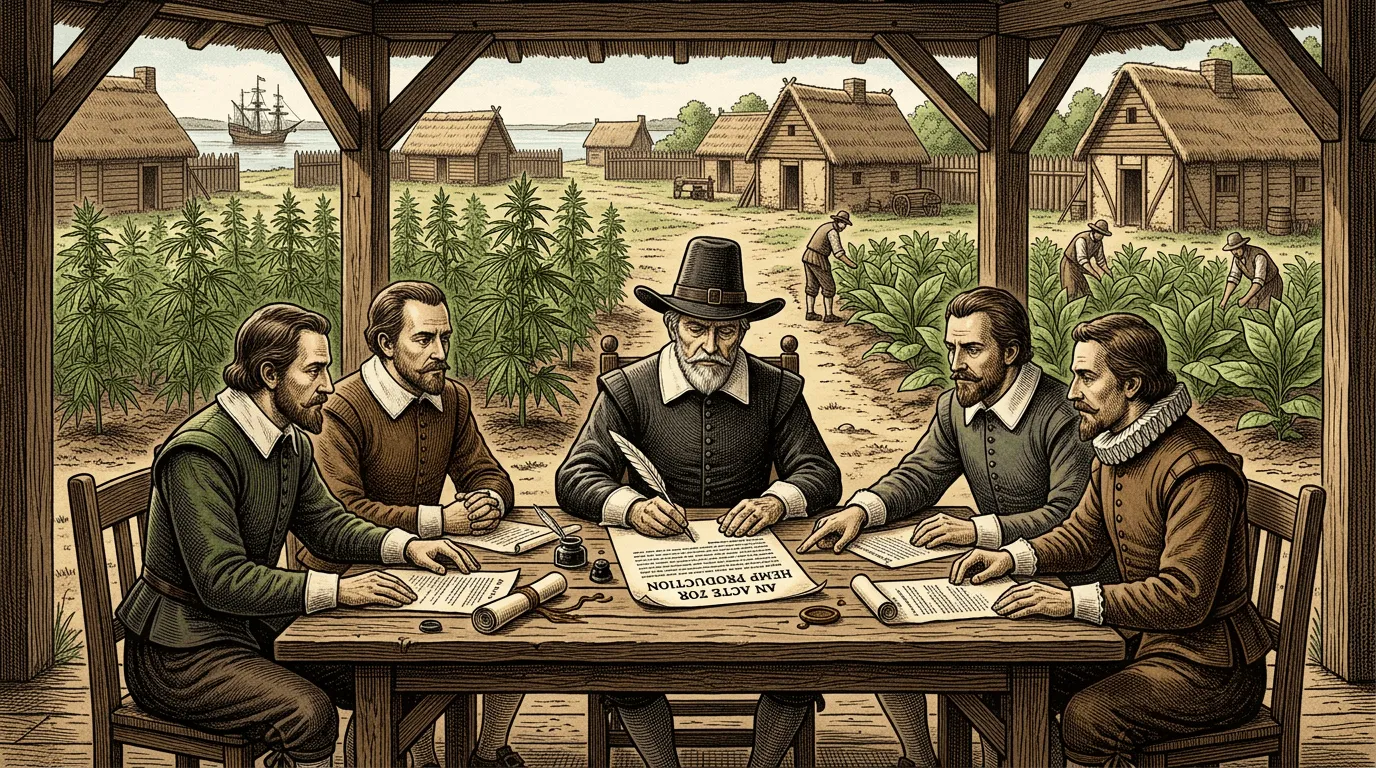
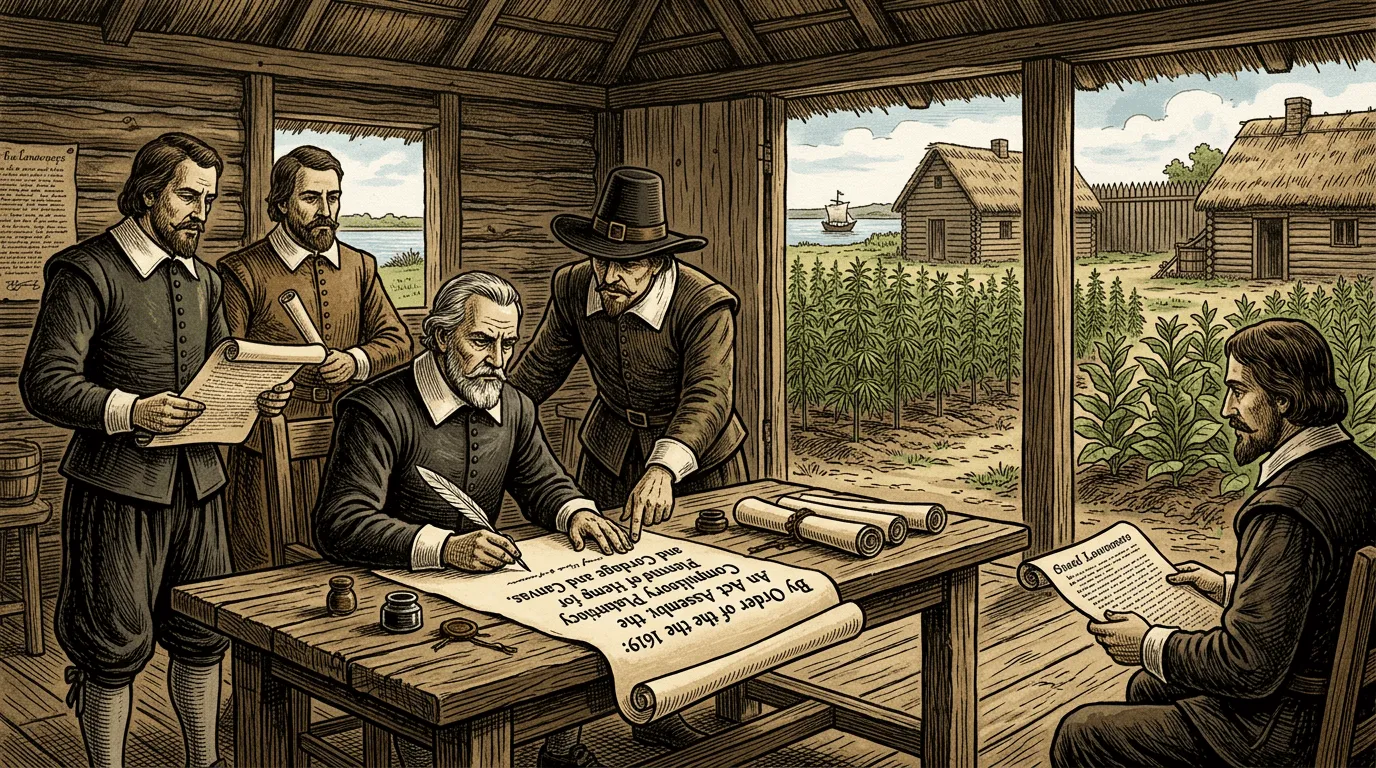
In 1619, the House of Burgesses in Jamestown passed a monumental decree. It required every colonial planter to set aside a portion of their land specifically for hemp.
This wasn’t a suggestion; it was a mandate. Farmers who failed to meet their hemp quotas could be fined or even imprisoned. The plant was so vital to the economy that it eventually became legal tender. In many parts of the colonies, you could actually pay your taxes using nothing but bundles of hemp fiber.
The Hardships: Why Farmers Resisted
If hemp was so valuable, why did the government have to force people to grow it? The answer lies in the grueling nature of colonial labor.
- The Labor Trap: Processing hemp in the 1600s was backbreaking work. It had to be “retted” (soaked in water to rot the outer bark), dried, and then “broken” by hand using heavy wooden mallets to separate the fibers.
- The Tobacco Rivalry: Most farmers preferred growing tobacco. While hemp was essential for the state, tobacco was more profitable for the individual. Tobacco was easier to process and had a high demand in the smoking parlors of Europe.
- Infrastructure Gaps: The colonies lacked the specialized mills needed to process hemp on a mass scale. This meant the farmers had to do everything by hand, often at the expense of their own food crops.
The Legacy of the 1619 Decree
Despite the hardships and the resistance from farmers who preferred the easier profits of tobacco, the 1619 mandate successfully integrated hemp into the American landscape. It ensured that the colonies had the materials needed to build their own ships, clothe their own people, and eventually, provide the paper that would carry the sparks of revolution a century later.
As we look toward the July 4th celebrations, it’s worth remembering that the very first “American” industry wasn’t technology or finance—it was the humble hemp plant.
At Wellspring CBD, we see ourselves as part of this long lineage. We aren’t just selling a product; we are participating in a 400-year-old American tradition of agricultural innovation and resilience.
Jason Liss — Co-Founder & Chief Formulator
As a Co-Founder of Wellspring CBD, Jason has been an advocate and pioneer in the cannabis and hemp industries since 1996. Passionate about helping people achieve better health through unique natural supplements, Jason uses his decades of experience to guide readers toward effective wellness solutions.
🌱 🚜 Hemp Plant & History

How to Use Hemp Flower: The Heat-and-Inhale Basics
🌱 The Hemp Plant & History
The Dawn of Liberty: How the Farm Bills of 2014 and 2018 Restored America’s Founding Crop
🌱 The Hemp Plant & History
The Dark Ages of Hemp: Bureaucracy, Science, and the 1970 Controlled Substances Act
🌱 New Here? First Order
Take 40% Off Your First Order
Join the Wellspring Journal for honest CBD education — enter your name and email to unlock an exclusive first-order code. Instant, no spam, one-click unsubscribe.
🔒 Instant Code
🌿 Zero Spam
✉️ 1-Click Unsubscribe
🌴 90-Day Promise
Discussion