🔒 Secure Checkout
·
90-Day Promise
·
Free Shipping $75+
🌱 The Hemp Plant & History
 · Co-Founder & Chief Formulator
Honest Guidance · Daily Routines · Plant Wellness
Rigging the Republic: How Hemp Saved the US Navy in the War of 1812
· Co-Founder & Chief Formulator
The War of 1812 is often remembered for the burning of Washington D.C. and the writing of the Star-Spangled Banner. But behind the military strategies lay a massive logistical nightmare. The young United States was fighting the greatest naval power in the world, and America’s ability to survive came down to a single agricultural resource: industrial hemp.
The Floating Forests of Rope
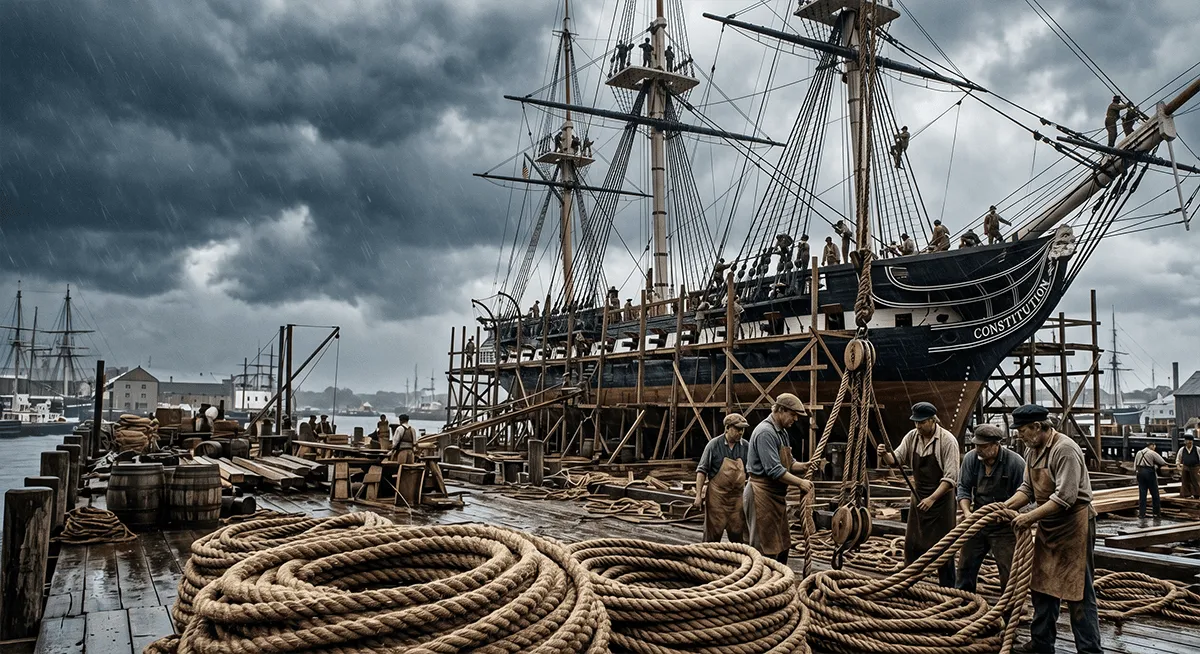
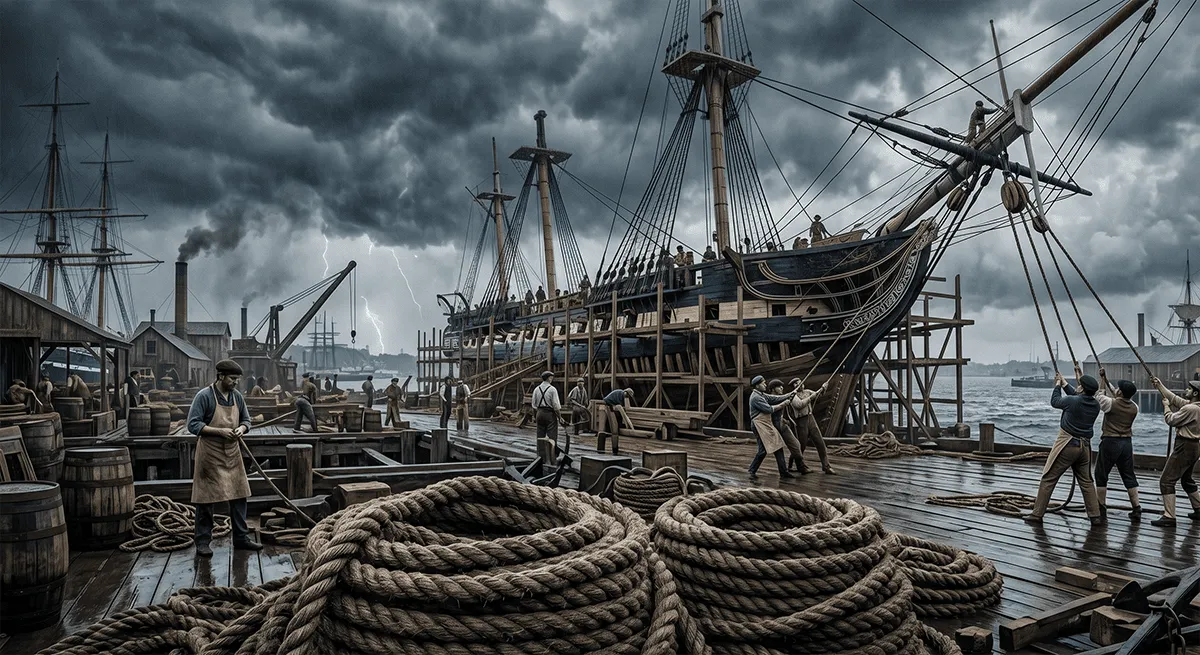
To understand the scale of the crisis, one must understand the anatomy of an 18th- or 19th-century warship. A vessel like the USS Constitution was essentially a massive machine powered by hemp.
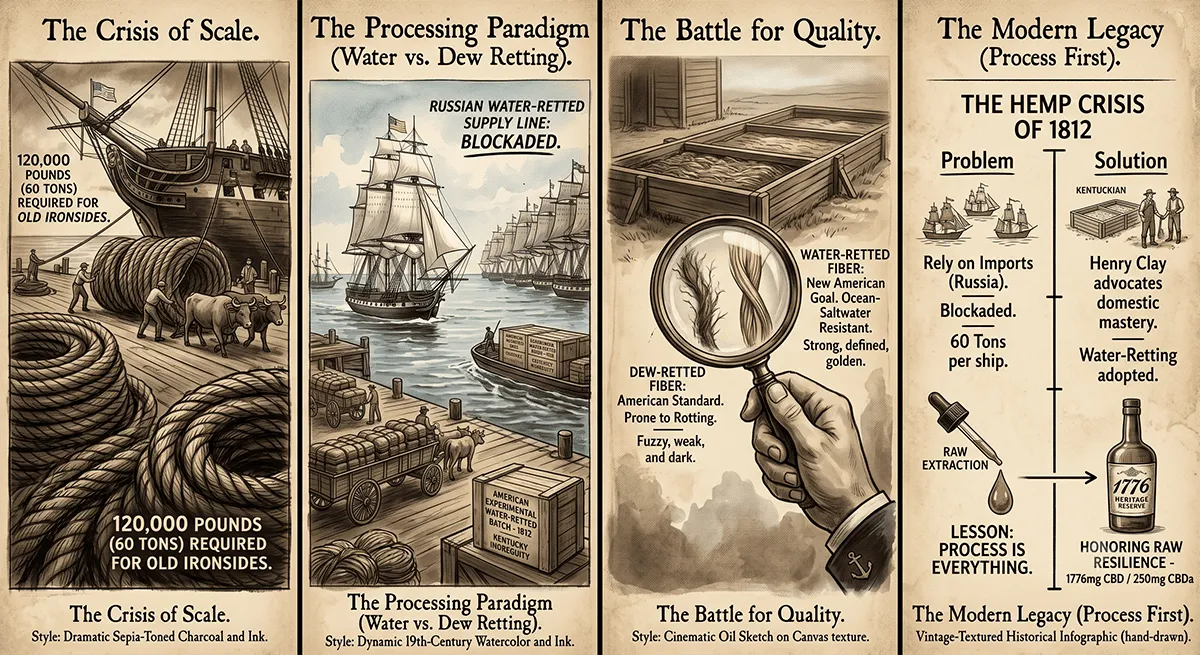
- The ship required over 120,000 pounds (60 tons) of hemp fiber.
- The anchor cables alone were often up to 22 inches in circumference, entirely woven from hemp.
- Every sail, piece of rigging, and sailor’s uniform relied on the strength of the fiber.
Hemp was favored because of its natural resistance to mildew and its incredible tensile strength under the punishing conditions of Atlantic storms.
| HEMP CONSUMPTION: USS CONSTITUTION | |
|---|---|
| Rigging & Running Ropes | ~30-40 Tons of Pure Fiber |
| Anchor Cables (22″ thick) | ~10-15 Tons |
| Sails & Canvas Uniforms | ~10 Tons |
The Great British Blockade
Before 1812, the United States was highly dependent on Russian hemp. Russian growers utilized a method called “water-retting”—submerging the harvested stalks in pools of water to allow microbes to cleanly separate the fiber from the woody core.
American farmers, lacking the specialized infrastructure, relied on “dew-retting,” leaving the stalks in the fields to be broken down by dew and rain. Dew-retted hemp was darker, weaker, and degraded quickly in salty ocean water.
When the British Royal Navy blockaded American ports, the Russian supply line vanished overnight. The US Navy was trapped.
Kentucky to the Rescue
The crisis forced a rapid transformation in American agriculture. Henry Clay, a powerful statesman from Kentucky, became a fierce advocate for domestic hemp production. He realized that economic independence was a prerequisite for military independence.
American farmers rose to the challenge, building specialized water-retting pools and redesigning mechanical breaks to improve the quality of domestic fiber. By the end of the war, American hemp wasn’t just a substitute—it was a competitor to the best fiber in the world.
The Wellspring Philosophy: Processing is Everything
The lesson of 1812 is clear: The value of hemp is determined by how it is treated after the harvest. At Wellspring, we approach our CBD extraction with the same strict focus on processing integrity. Our 1776 Heritage Reserve mimics the uncompromising quality of those early American yields. By utilizing a gentle, unrefined extraction method, we keep the plant’s natural profile intact.
It contains 1776mg of CBD and a massive 250mg of CBDa—the raw, acidic cannabinoid that heat-heavy processing normally destroys. Yes, it tastes deeply earthy and bitter. But just like the ropes that held “Old Ironsides” together, it is built for strength, not for show.
Jason Liss — Co-Founder & Chief Formulator
As a Co-Founder of Wellspring CBD, Jason has been an advocate and pioneer in the cannabis and hemp industries since 1996. Passionate about helping people achieve better health through unique natural supplements, Jason uses his decades of experience to guide readers toward effective wellness solutions.
🌱 🚜 Hemp Plant & History
How to Use Hemp Flower: The Heat-and-Inhale Basics
🌱 The Hemp Plant & History
The Dawn of Liberty: How the Farm Bills of 2014 and 2018 Restored America’s Founding Crop
🌱 The Hemp Plant & History
The Dark Ages of Hemp: Bureaucracy, Science, and the 1970 Controlled Substances Act
🌱 New Here? First Order
Take 40% Off Your First Order
Join the Wellspring Journal for honest CBD education — enter your name and email to unlock an exclusive first-order code. Instant, no spam, one-click unsubscribe.
🔒 Instant Code
🌿 Zero Spam
✉️ 1-Click Unsubscribe
🌴 90-Day Promise
Discussion