🔒 Secure Checkout
·
90-Day Promise
·
Free Shipping $75+
🌱 Botanicals & Herbs
 · Co-Founder & Chief Formulator
Honest Guidance · Daily Routines · Plant Wellness
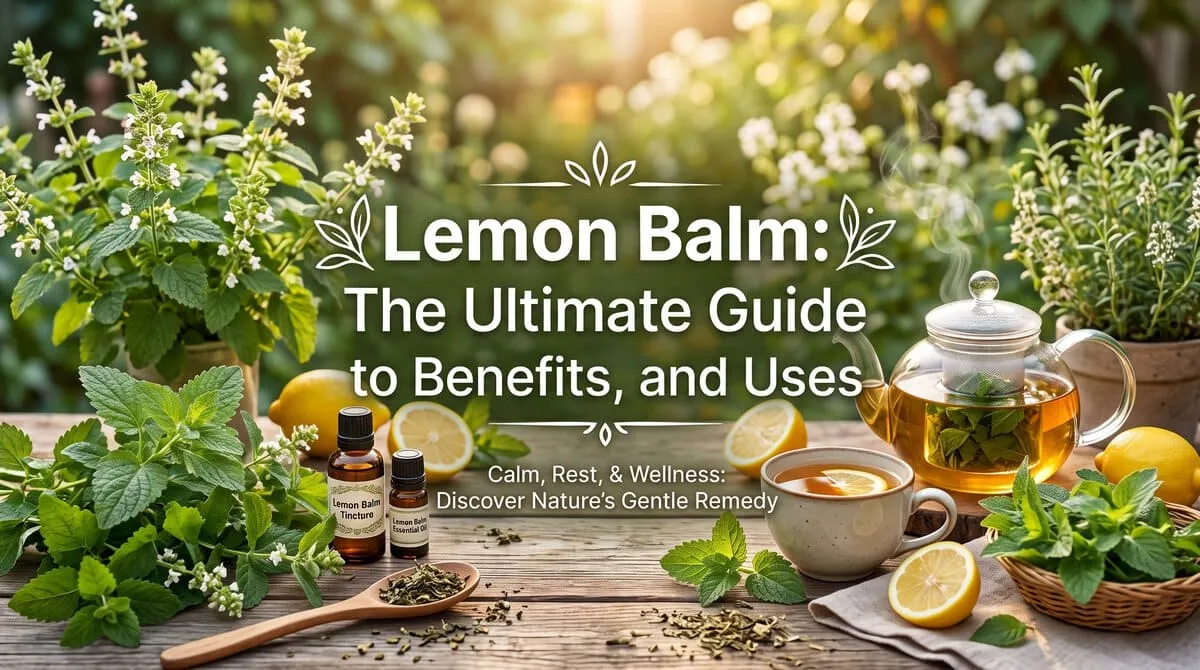
Lemon Balm: The Ultimate Guide to Benefits, and Uses
· Co-Founder & Chief Formulator
For centuries, herbalists have referred to Melissa officinalis as the “gladdening herb,” a title earned through its historical reputation for lifting the spirits and soothing a troubled mind. In our modern era of relentless connectivity and high-pressure living, the need for effective, natural tools to manage stress has never been greater.
Lemon balm is not merely a garden curiosity; it is a scientifically backed, versatile botanical powerhouse that bridges the gap between traditional wisdom and modern neuropharmacology. This guide explores the multifaceted nature of this herb, from its role in the garden to its potential as a functional nootropic.
Introduction to Melissa Officinalis
The “Gladdening Herb”: A Brief History
The historical footprint of lemon balm is immense. Ancient Greeks planted it near their hives to entice bees, believing it to be a plant of pure joy. By the Middle Ages, it was widely used by monastic orders to create “Carmelite water,” an infusion credited with relieving nervous tension and promoting longevity. Throughout history, the herb has maintained a reputation as a digestive aid and a sedative, cementing its status as a staple of European traditional medicine.
Defining Lemon Balm: More Than Just a Garden Mint
While often categorized alongside common garden varieties, lemon balm is a distinct botanical entity. It is a perennial herb characterized by its sharp, citrus-scented leaves. Unlike invasive culinary mints, Melissa officinalis offers a more nuanced, lemony aromatic profile. It functions as both an accessible kitchen ingredient and a potent therapeutic agent, serving those who seek natural methods to regulate their mood, improve sleep, and sharpen cognitive function.
Botanical Profile: Identifying and Growing Lemon Balm
Physical Characteristics: From Scalloped Edges to Pale Pink Flowers
Identification begins with the leaves, which are ovate with distinct, scalloped, or serrated edges. When crushed, the foliage releases a potent fragrance reminiscent of lemon zest. During the summer, the plant produces small, inconspicuous, pale-yellow or white flowers that are particularly attractive to pollinators. Its appearance is humble, yet its chemical profile is complex.
Understanding the Lamiaceae Family
Lemon balm is a member of the Lamiaceae family, sharing taxonomic roots with basil, rosemary, and sage. This family is known for the high concentration of volatile oils stored in leaf glands. Like its cousins, lemon balm is hardy and resilient, though it requires specific conditions to thrive and produce the oils that define its therapeutic efficacy.
Cultivation and Harvest: Clumps, Cultivars, and Pollinators
Cultivation is straightforward; the plant grows in robust clumps and prefers partial shade. Gardeners often value it for its ability to support local bee populations. It is important to distinguish this species from Monarda, commonly referred to as “bee balm.” While both attract pollinators, they possess entirely different therapeutic properties. For the highest medicinal quality, harvesting should occur before the plant fully flowers.
Hand-Harvesting and Preserving Volatile Aromatic Compounds
Preservation is the critical final step. The therapeutic oils in lemon balm are highly volatile and sensitive to heat and light. To preserve them, harvest leaves in the morning after the dew has evaporated. Drying should be done in a dark, well-ventilated space. If the leaves are heated or over-dried, the citrus aroma vanishes, indicating that the medicinal compounds have evaporated.
The Phytochemistry of Calm: How Lemon Balm Works
The Role of Rosmarinic Acid and Phenolic Content
The efficacy of Melissa officinalis is rooted in its rich phytochemical makeup, particularly its high concentration of rosmarinic acid. This phenolic compound acts as a powerful antioxidant and antiviral agent. It is a primary driver behind the herb’s ability to protect cells from oxidative stress, contributing to its systemic health benefits.
Volatile Oils: Citral, Citronellal, and Eugenol
The “lemon” scent is provided by volatile oils, specifically citral and citronellal. These compounds are largely responsible for the plant’s sedative properties. When inhaled via aromatherapy or ingested, they interact with the nervous system to promote relaxation and dampen the physical manifestations of stress.
Understanding the GABAergic Mechanism and Cortisol Regulation
Perhaps the most significant mechanism is the herb’s influence on GABAergic pathways. GABA is the body’s primary inhibitory neurotransmitter—the “brake pedal” for the nervous system. Research suggests that lemon balm extracts inhibit GABA transaminase (GABA-T), an enzyme that breaks down GABA. By inhibiting this enzyme, the plant increases the availability of GABA in the brain, naturally lowering anxiety and cortisol levels.
AChE Inhibitors and the Cholinergic System
Beyond sedation, the plant contains compounds that act as acetylcholinesterase (AChE) inhibitors. By preventing the breakdown of acetylcholine—a neurotransmitter critical for memory and focus—lemon balm supports cognitive function. This makes it a unique botanical that acts as both a calming agent and a focus-enhancing nootropic.
Therapeutic Benefits for the Nervous System
Reducing Anxiety and Stress: Insights from DASS-21 Research
Clinical studies utilizing the DASS-21 (Depression, Anxiety, and Stress Scale) have consistently shown that standardized extracts can significantly reduce symptoms of acute anxiety. By stabilizing the nervous system, it helps users manage the “fight or flight” response, making it an excellent choice for those dealing with work-related or situational stress.
Improving Sleep Quality: Addressing Insomnia and Sleep Disturbances
When combined with other herbs like valerian or chamomile, lemon balm is highly effective for insomnia. It does not induce the “groggy” feeling associated with synthetic sleeping medications, but rather assists the body in achieving a state of physiological readiness for rest.
Cognitive Performance: Lemon Balm as a Nootropic and Cognitive Enhancer
For individuals seeking mental clarity, the plant’s ability to improve cognitive performance is a major draw. Studies show that participants using lemon balm demonstrate improved reaction times and accuracy in standardized memory tasks. It is effectively a “calming stimulant”—it helps the user remain alert while removing the jitters associated with caffeine.
Potential Applications in Alzheimer’s Disease and Memory Support
The AChE-inhibiting properties mentioned earlier have sparked significant interest in the context of neurodegenerative support. While not a cure, there is ongoing research into how these compounds might support acetylcholine levels in the aging brain, potentially aiding memory and cognitive stability.
Physical Health and Antiviral Properties
Managing Herpes Simplex: Lip Balms and Antiviral Activity
Perhaps the most well-documented topical use of the herb is its impact on the herpes simplex virus. Clinical trials have shown that creams containing concentrated extract can shorten the healing time of cold sores and reduce the frequency of outbreaks. Its antiviral activity prevents the virus from entering host cells, providing a natural alternative to synthetic antivirals.
Digestive System Support: Relieving Bloating and Discomfort
Lemon balm is a classic carminative herb. It works by relaxing the smooth muscles of the digestive tract. If you suffer from gas, bloating, or stress-induced indigestion, a warm cup of infusion can soothe the gut lining and facilitate healthier digestion.
Cardiovascular Health: Investigating Effects on Blood Pressure
Preliminary animal studies and small-scale human trials suggest that the herb may assist in mild blood pressure regulation. By reducing systemic stress and improving autonomic nervous system balance, it helps normalize heart rate variability in healthy individuals.
The Role of Antioxidants (Flavonoids and Triterpenes) in Systemic Health
The breadth of the herb’s health impact is tied to its flavonoid content. These antioxidants work systemically to combat inflammation. Whether consumed as a tea or a supplement, these compounds support immune resilience and long-term cellular protection.
The Home Apothecary: Methods of Preparation and Extraction
Water-Based Remedies: Herbal Teas and Infusions
Infusions are the simplest way to access the herb’s benefits. Use fresh leaves for the highest concentration of volatile oils. Pour near-boiling water over the leaves, cover the vessel to trap the essential oils, and let it steep for at least ten minutes. This method is ideal for acute stress relief.
Alcohol-Based Extractions: Creating a Potent Lemon Balm Tincture
For long-term use and shelf stability, tinctures are superior. By soaking the dried or fresh herb in high-proof alcohol for four to six weeks, you extract the medicinal resins and phenolic compounds that water alone cannot retrieve. This creates a potent, concentrated dose that is easy to standardize.
Alcohol-Free Options: Herbal Infused Glycerin and Glycerites
For those sensitive to alcohol, glycerites provide an effective alternative. Vegetable glycerin acts as a solvent that preserves the herb’s properties while offering a sweet, palatable finish. This is an excellent method for preparing remedies for children or those avoiding alcohol for personal reasons.
Traditional Remedies: Oxymels and Herbal Honey Syrups
An oxymel—a mixture of honey and vinegar—is a traditional, delicious way to preserve lemon balm. The vinegar extracts the alkaloids, while the honey adds soothing, antimicrobial properties. This is a highly effective way to consume the herb daily as a tonic for mood and digestion.
Topical Applications: Infused Oils, Salves, and Hydrosols
Topical preparations are essential for skin health. Infusing the herb into carrier oils like jojoba or olive oil allows you to create healing salves for cold sores or soothing balms for skin inflammation. Distilled hydrosols—the aromatic water left over from steam distillation—are gentle enough for facial mists and therapeutic compresses.
Conclusion
Lemon balm is a rare botanical that offers tangible, multi-systemic benefits. Whether you are leveraging its GABAergic pathways to manage anxiety, utilizing its AChE-inhibiting qualities for cognitive support, or applying it topically to address cold sores, Melissa officinalis remains a cornerstone of natural wellness.
To implement these findings, start by identifying your primary goal: for acute anxiety, a daily tea infusion is often sufficient, whereas cognitive enhancement or antiviral support may require a standardized supplement or concentrated tincture. Always prioritize the quality of your source material—ensure that any supplements are free from fillers and that your dried herbs remain fragrant.
While lemon balm is generally considered safe, those currently using thyroid medications or sedative-class drugs should consult with a healthcare professional, as the herb’s influence on the endocrine and nervous systems can be potent. By integrating this versatile herb into your routine with intention, you can experience firsthand why it has been revered as a source of relief and clarity for thousands of years. Start with small, consistent doses, listen to your body’s response, and allow this “gladdening herb” to become a foundation of your daily health toolkit.
Jason Liss — Co-Founder & Chief Formulator
As a Co-Founder of Wellspring CBD, Jason has been an advocate and pioneer in the cannabis and hemp industries since 1996. Passionate about helping people achieve better health through unique natural supplements, Jason uses his decades of experience to guide readers toward effective wellness solutions.
In this guide
- 01 Introduction to Melissa Officinalis
- 02 Botanical Profile: Identifying and Growing Lemon Balm
- 03 The Phytochemistry of Calm: How Lemon Balm Works
- 04 Therapeutic Benefits for the Nervous System
- 05 Physical Health and Antiviral Properties
- 06 The Home Apothecary: Methods of Preparation and Extraction
- 07 Conclusion
Scroll to read · tap a topic to jump

🌱 New Here? First Order
Take 40% Off Your First Order
Join the Wellspring Journal for honest CBD education — enter your name and email to unlock an exclusive first-order code. Instant, no spam, one-click unsubscribe.
🔒 Instant Code
🌿 Zero Spam
✉️ 1-Click Unsubscribe
🌴 90-Day Promise
Discussion