
🔒 Secure Checkout
·
90-Day Promise
·
Free Shipping $75+
🌱 Cannabinoids Explained
 · Co-Founder & Chief Formulator
Honest Guidance · Daily Routines · Plant Wellness
Drug Test Cutoff Levels: Full-Spectrum vs. Broad-Spectrum vs. Isolate
· Co-Founder & Chief Formulator
For nurses, commercial truck drivers, first responders, union workers, and corporate professionals, managing daily joint stiffness, physical stress, or poor sleep with over-the-counter hemp products comes with an agonizing question: Will this cost me my job?
Drug testing remains a standard condition of employment across thousands of American industries. While industrial hemp became federally legal under the 2018 Farm Bill, workplace drug testing protocols have not changed to accommodate non-intoxicating cannabinoids.
The internet is flooded with conflicting, often dangerous advice. Some sources claim that all legal CBD is completely safe from drug tests, while others warn that even a single dropper of hemp oil will ruin a career.
The truth lies in clinical pharmacology and standard forensic laboratory protocols. Standard drug tests do not screen for cannabidiol (CBD). However, the specific product spectrum you choose—and the microscopic milligrams of trace cannabinoids it contains—determines whether you pass cleanly or trigger a career-threatening positive screen.
Below, we explain the federal two-tier testing protocol, break down the 50 ng/mL screening and 15 ng/mL confirmatory cutoffs, examine why full-spectrum products frequently fail daily users, and outline why pure 0.0% THC isolate provides the ultimate safety net.
What Workplace Drug Tests Actually Screen For
To understand your risk, you must first dispel the most common myth in the hemp industry: workplace drug screenings do not look for CBD.
Standard 5-panel, 10-panel, and Department of Transportation (DOT) urine tests are designed to identify controlled substances: amphetamines, cocaine metabolites, opiates, phencyclidine (PCP), and marijuana.
When testing for cannabis exposure, laboratories do not measure parent THC or non-intoxicating CBD. Instead, they look specifically for a secondary metabolite known as THC-COOH (11-nor-9-carboxy-THC).
When Delta-9 THC is processed by the liver, it is converted into THC-COOH before being excreted through urine. Workplace drug tests are calibrated exclusively to detect the presence and concentration of this single metabolite.
The Two-Tier Testing Protocol: 50 ng/mL vs. 15 ng/mL Cutoffs
Federally regulated testing—governed by the Substance Abuse and Mental Health Services Administration (SAMHSA)—and standard private-sector employee testing follow a strict, two-tiered diagnostic process:
[ STEP 1: INITIAL SCREENING ] ────> Immunoassay Test (Cutoff: 50 ng/mL)
                                          │
                      ┌───────────────────┴───────────────────┐
                      ▼                                       ▼
               [ Under 50 ng/mL ]                      [ 50 ng/mL or Higher ]
                 RESULT: PASS                            "PRESUMPTIVE POSITIVE"
                                                              │
                                                              ▼
                                               [ STEP 2: CONFIRMATORY TESTING ]
                                                 GC-MS / LC-MS (Cutoff: 15 ng/mL)
                                                              │
                                               ┌──────────────┴──────────────┐
                                               ▼                             ▼
                                        [ Under 15 ng/mL ]            [ 15 ng/mL or Higher ]
                                          RESULT: PASS                  RESULT: VERIFIED FAIL
Tier 1: The Initial Immunoassay Screen (50 ng/mL Cutoff)
Your urine sample is first analyzed using an immunoassay test (such as EMIT or ELISA). Immunoassays use laboratory-engineered antibodies that bind to THC-COOH molecules.
The standard SAMHSA threshold for this initial screen is 50 nanograms per milliliter (50 ng/mL).
- If the antibody binding indicates less than 50 ng/mL of THC-COOH, the test is reported as negative, and testing stops.
- If the sample meets or exceeds 50 ng/mL, it is flagged as a “presumptive positive” and automatically sent to Tier 2.
The Immunoassay Flaw: Immunoassays are rapid and cost-effective, but they are not 100% chemically specific. On cheap point-of-care rapid dip cards, antibodies can occasionally cross-react with other related cannabinoids (like high-dose CBN) or certain common over-the-counter NSAIDs, generating a false presumptive positive.
Tier 2: The Confirmatory GC-MS Test (15 ng/mL Cutoff)
A presumptive positive cannot be used to take adverse employment action. Federal regulations require that all non-negative samples undergo secondary confirmation using Gas Chromatography-Mass Spectrometry (GC-MS) or Liquid Chromatography-Tandem Mass Spectrometry (LC-MS/MS).
GC-MS is the gold standard of forensic chemistry. It vaporizes the sample and identifies individual molecules by their exact molecular weight and chemical fingerprint. Because GC-MS is far more precise, the confirmatory cutoff is lowered to 15 ng/mL.
- If GC-MS detects 15 ng/mL or more of true THC-COOH, the Medical Review Officer (MRO) officially reports a verified positive drug test.
- If the concentration is below 15 ng/mL, or if the initial screen was triggered by non-THC cross-reactivity, the result is reported as negative.
The Full-Spectrum Accumulation Trap: Why “Legal Trace THC” Fails Daily Users
The 2018 Farm Bill defines legal industrial hemp as cannabis containing no more than 0.3% Delta-9 THC by dry weight.
Many consumers assume that because 0.3% THC is federally legal and non-intoxicating, it is safe for workplace drug testing. This is one of the most costly misconceptions in the wellness industry.
The Problem of Lipophilic Accumulation
Cannabinoids are lipophilic (fat-soluble) molecules. When consumed orally, cannabinoids that are not immediately metabolized do not wash out through urine like water-soluble vitamins. Instead, they are absorbed into adipose (body fat) tissue.
Consider the compounding mathematics:
- A high-potency 30mL bottle of full-spectrum CBD oil containing 0.3% THC holds up to 60 to 90 milligrams of pure Delta-9 THC.
- If you consume a daily serving of 50mg to 100mg of full-spectrum CBD, you are ingesting 1 to 2 milligrams of active THC every single day.
Over weeks of consistent daily supplementation, trace THC accumulates in fatty tissue faster than your liver can eliminate it. Eventually, body fat stores become saturated, steadily leaching THC-COOH into your bloodstream and urine at levels that easily cross the 50 ng/mL screening threshold.
Clinical Confirmation: The JAMA Psychiatry Study
This accumulation hazard is not theoretical. In a landmark clinical trial published in JAMA Psychiatry and documented by PubMed Central (PMC9429743), researchers administered legal, commercially available full-spectrum CBD to healthy adults daily for four weeks.
The results were alarming for working professionals:
- 50% of participants receiving daily full-spectrum CBD tested positive for urinary THC-COOH at the standard 50 ng/mL screening cutoff.
- Multiple participants confirmed positive on secondary GC-MS testing above 15 ng/mL.
Diagnostic testing giants have issued identical warnings. As documented in clinical insights from Quest Diagnostics, daily consumption of commercially compliant full-spectrum CBD products can and does produce confirmed positive workplace drug tests.
To explore the broader legal and testing differences between products, review our analysis on CBD products and drug tests, as well as our explainer on does CBD get you high.
Broad-Spectrum vs. CBD Isolate: The Safety Breakdown
To avoid the accumulation risks of full-spectrum extracts, consumers who face drug testing turn to refined product spectrums:
1. Broad-Spectrum CBD: The Middle Ground
Broad-spectrum extracts start as full-spectrum crude oil that undergoes specialized post-extraction processing (such as flash chromatography) to selectively strip out Delta-9 THC while retaining minor cannabinoids (CBG, CBN, CBC) and terpenes.
- The Advantage: Retains the entourage effect without intentional THC.
- The Caveat: While high-quality broad-spectrum products test as “Non-Detect” (ND) for THC, trace chemical degradation can occasionally occur. Furthermore, high concentrations of minor cannabinoids like CBN have been documented to occasionally cross-react on cheap, unregulated immunoassay dip cards.
2. Pure CBD Isolate: The 0.0% THC Safety Net
CBD isolate is the purest, most refined form of cannabidiol available. Through secondary crystallization and solvent purging, the extract is refined down to a 99%+ pure crystalline powder.
All other plant compounds—THC, minor cannabinoids, plant waxes, chlorophyll, and terpenes—are completely eliminated.
- The Advantage: Zero THC molecules. Zero chemical precursors that can convert into THC-COOH. Zero risk of minor cannabinoid immunoassay cross-reactivity.
- The Workplace Standard: For individuals subject to random, zero-tolerance workplace drug screenings, pure CBD isolate is the only formulation that provides complete pharmacological peace of mind.
To evaluate these differences in workplace settings, read our guide on CBD and workplace drug tests: isolate vs. broad spectrum, alongside our complete overview of what THC-free CBD is and how it is tested.
Diagnostic Table: Detection Probabilities Across Product Spectrums
| Product Spectrum Type | Typical Delta-9 THC Content | Immunoassay Screen Risk (50 ng/mL) | GC-MS Confirmation Risk (15 ng/mL) | Recommended For Testing-Sensitive Workers? |
|---|---|---|---|---|
| Full-Spectrum CBD | Up to 0.3% (trace legal THC) | HIGH RISK (Frequent positive after 2–4 weeks daily use) | HIGH RISK (Confirmed positive for true THC-COOH) | NO. Strictly avoid if your job requires drug testing. |
| Broad-Spectrum CBD | Non-Detect (ND) to <0.01% THC | VERY LOW RISK (Possible rare cross-reactivity on cheap dip cards) | EXTREMELY LOW RISK (Confirms negative on GC-MS) | CAUTION. Acceptable for general testing, but carries minor risk. |
| Pure CBD Isolate (0.0% THC) | 0.00% THC (99%+ pure CBD) | ZERO RISK (Cannot trigger antibodies for THC-COOH) | ZERO RISK (No THC metabolites present) | YES. The definitive gold standard for workplace safety. |
| Topical CBD Balms & Creams | 0.0% to trace 0.3% THC | ZERO RISK (Topical cannabinoids do not enter systemic blood) | ZERO RISK (No urinary metabolite excretion) | YES. Transdermal application does not reach the bloodstream. |
How to Read an ISO 17025 Third-Party Lab Report (COA)
Never trust front-label marketing claims like “THC-Free” or “Zero THC” without verifying the product’s third-party Certificate of Analysis (COA).
To ensure your product protects your career, check these three parameters on every COA:
- Accredited Laboratory: Ensure the test was conducted by an independent, third-party laboratory accredited to ISO/IEC 17025 standards.
- Limit of Detection (LOD) & Limit of Quantitation (LOQ): The LOD is the lowest concentration the laboratory’s instruments can detect; the LOQ is the lowest level they can reliably quantify. Look for an LOQ of at least 0.001% to 0.005%.
- Delta-9 THC Reading: The Delta-9 THC line must read “ND” (Non-Detect) or “<LOQ”. If a numerical percentage (such as 0.05% or 0.12%) appears, the product contains active trace THC and is unsafe for daily testing-sensitive use.
The Wellspring Safety Standard
Since 2013, Wellspring CBD has formulated pure, transparent hemp wellness in Cheyenne, Wyoming. We understand that for working professionals, product purity is not just a preference—it is your livelihood.
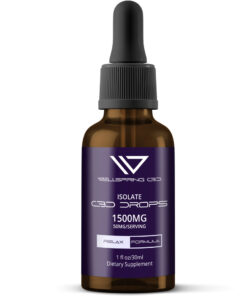
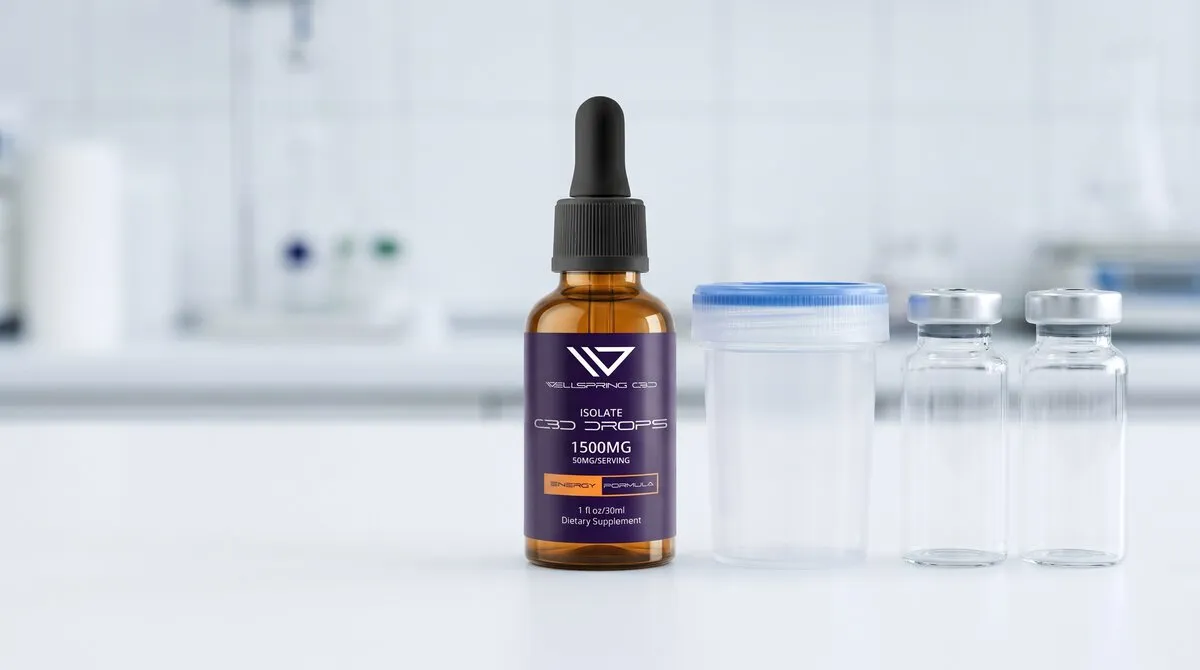
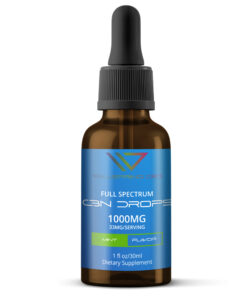
Our 0.0% THC pure CBD isolate drops are crafted exclusively from 99%+ pure crystalline isolate suspended in organic coconut MCT oil. Every single production batch is independently analyzed by accredited ISO 17025 laboratories, confirming 0.00% THC content, zero residual solvents, and zero agricultural contaminants.
Explore our full collection of verified sublingual CBD drops today and take back your daily physical calm, backed by our 90-Day Satisfaction Promise.
Frequently Asked Questions
Can secondhand marijuana smoke cause a positive drug test?
Under normal real-world circumstances, passive exposure to secondhand marijuana smoke will not trigger a positive workplace drug test at the 50 ng/mL screening threshold. Clinical studies indicate that you would need to be confined in an unventilated vehicle or tiny room filled with dense, visible smoke for hours to absorb sufficient THC to cross 50 ng/mL.
Do topical CBD balms show up on urine drug tests?
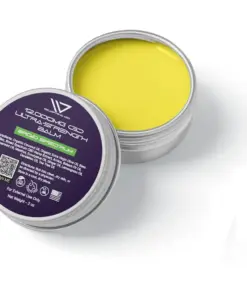
No. High-potency topical balms and salves permeate localized dermal layers to saturate peripheral CB2 and TRPV1 receptors in joint capsules and muscles. They do not cross vascular barriers into the systemic bloodstream in quantities sufficient to undergo liver metabolism or produce urinary THC-COOH metabolites.
How long does it take for trace THC from full-spectrum CBD to leave your system?
Because cannabinoids accumulate in body fat, clearance time depends heavily on body mass index (BMI), metabolism, hydration, and duration of use. Occasional users typically clear trace THC within 3 to 7 days, while chronic, daily consumers of full-spectrum CBD may require 15 to 30+ days to drop below the 50 ng/mL and 15 ng/mL cutoffs.
What should I do if a workplace screening comes back presumptive positive?
If a rapid on-site immunoassay dip card flags a presumptive positive, stay calm and immediately exercise your legal right to a confirmatory split-sample GC-MS or LC-MS test. Explain to the Medical Review Officer (MRO) that you utilize certified 0.0% THC hemp supplements, and request quantitative confirmation to rule out antibody cross-reactivity.
🌿 Formulations in This Guide
Recommended Products for Your Routine
Organic US-grown hemp, batch Certificate of Analysis published on each page, backed by our 90-Day Money-Back Promise.
Jason Liss — Co-Founder & Chief Formulator
As a Co-Founder of Wellspring CBD, Jason has been an advocate and pioneer in the cannabis and hemp industries since 1996. Passionate about helping people achieve better health through unique natural supplements, Jason uses his decades of experience to guide readers toward effective wellness solutions.
In this guide
- 01 What Workplace Drug Tests Actually Screen For
- 02 The Two-Tier Testing Protocol: 50 ng/mL vs. 15 ng/mL Cutoffs
- 03 The Full-Spectrum Accumulation Trap: Why “Legal Trace THC” Fails Daily Users
- 04 Broad-Spectrum vs. CBD Isolate: The Safety Breakdown
- 05 Diagnostic Table: Detection Probabilities Across Product Spectrums
- 06 How to Read an ISO 17025 Third-Party Lab Report (COA)
- 07 The Wellspring Safety Standard
- 08 Frequently Asked Questions
Scroll to read · tap a topic to jump

🌱 New Here? First Order
Take 40% Off Your First Order
Join the Wellspring Journal for honest CBD education — enter your name and email to unlock an exclusive first-order code. Instant, no spam, one-click unsubscribe.
🔒 Instant Code
🌿 Zero Spam
✉️ 1-Click Unsubscribe
🌴 90-Day Promise
Discussion