
🔒 Secure Checkout
·
90-Day Promise
·
Free Shipping $75+
🌱 Cannabinoids Explained
 · Co-Founder & Chief Formulator
Honest Guidance · Daily Routines · Plant Wellness
Water-Soluble CBD vs. CBD Oil: The Bioavailability & Absorption Clock
· Co-Founder & Chief Formulator
When people begin researching cannabidiol, one of the first things they learn is a standard dosing recommendation: take 25mg to 50mg of CBD oil every morning. Yet for many consumers, swallowed oil capsules and droppers fail to deliver noticeable calm or physical comfort. They wonder if CBD simply doesn’t work for their physiology, or if they need to double their daily milligrams.
In reality, the problem is rarely the cannabinoid itself. The bottleneck is fundamental human biophysics: oil and water do not mix.
The human body is approximately 60% water. The bloodstream, gastrointestinal fluids, and mucosal tissues are entirely aqueous environments. Because cannabinoids are naturally lipophilic (fat-soluble) hydrophobic molecules, swallowed CBD oil encounters massive biological resistance before it ever reaches systemic circulation.
To overcome this absorption hurdle, pharmaceutical and formulation scientists developed water-soluble CBD—utilizing advanced nano-emulsification and starch-based microencapsulation to transform fat-bound cannabinoids into hydrophilic, highly absorbable structures.
Below, we break down the pharmacokinetics of first-pass liver metabolism, compare the absorption clocks of water-soluble vs. oil-based CBD, examine the 4x to 5x bioavailability multiplier, and analyze the true economic cost per absorbed milligram.
The Biophysics Problem: Why Traditional CBD Oil Struggles Inside the Body
Phytocannabinoids like CBD are viscous, oily plant compounds. When extracted from industrial hemp, they naturally dissolve in carrier lipids such as medium-chain triglyceride (MCT) coconut oil, hemp seed oil, or olive oil.
When you swallow a traditional CBD softgel or oil-based capsule, it enters the stomach as a large lipid droplet. This triggers an arduous, multi-stage digestive process:
- Gastric Aggregation: Rather than dispersing evenly across stomach fluids, oil droplets clump together. They float on top of gastric secretions, delaying transit into the small intestine.
- Bile Salt Emulsification: To absorb fats, the gallbladder must release bile salts and pancreatic lipases to break large lipid clusters down into microscopic micelles. If you take CBD oil on an empty stomach without dietary fats, bile secretion is minimal, and absorption plummets.
- The First-Pass Hepatic Bottleneck: Once absorbed through the intestinal wall, traditional fats are routed directly through the hepatic portal vein to the liver. Inside the liver, cytochrome P450 (CYP450) metabolic enzymes aggressively break down active cannabidiol before it can enter the broader bloodstream.
According to clinical pharmacokinetics research published in Frontiers in Pharmacology, traditional oral swallowed CBD oil exhibits an estimated bioavailability of only 6% to 15%.
In practical terms, for every 50 milligrams of traditional swallowed CBD oil you consume, your body may successfully utilize only 3 to 7 milligrams. The remaining 85% to 94% is degraded by digestive acids, metabolized by the liver, or eliminated as gastrointestinal waste without ever reaching your endocannabinoid receptors.
How Water-Soluble CBD Works: Nanotechnology and Microencapsulation
Cannabinoids cannot literally be changed from an oil molecule into a water molecule at the atomic level. Rather, “water-soluble CBD” refers to an advanced formulation process that packages microscopic cannabinoid particles inside water-friendly carrier shells.
Two primary scientific techniques achieve this transformation:
1. High-Pressure Nano-Emulsification
In nano-emulsification, broad spectrum CBD extract is subjected to extreme ultrasonic or high-pressure homogenization. This mechanical force fractures oil droplets down from standard microscopic sizes (1,000 to 5,000 nanometers) into nanoscale droplets measuring under 50 to 100 nanometers.
These nanoscale droplets are coated in food-grade, hydrophilic emulsifiers. Because the particles are smaller than the wavelength of visible light, they do not clump or separate. When dropped into water, tea, or digestive fluids, they disperse instantly and evenly rather than floating as an oil slick.
2. Starch-Based Microencapsulation
In pharmaceutical microencapsulation, individual cannabinoid molecules are encased inside specialized, biocompatible starch matrices or beta-cyclodextrin complexes. As detailed in our clinical analysis on starch-based microencapsulation therapeutics, this protective shell shields sensitive cannabinoids from stomach acid degradation and delivers intact compounds directly to intestinal mucosal membranes for rapid uptake.
To understand the core manufacturing science behind these formats, read our foundational explainer on what is water soluble CBD.
The Absorption Clock: Onset Timing and Plasma Peaks
Beyond how much CBD reaches the bloodstream, the speed and consistency of delivery—the “absorption clock”—fundamentally changes the consumer experience.
[ CONVENTIONAL SWALLOWED OIL ]
Ingestion ──> Delayed Gastric Transit (45m) ──> Bile Breakdown (30m) ──> Liver First-Pass ──> Peak at 90-120 min (Low Peak)

[ NANO WATER-SOLUBLE CAPSULE ]
Ingestion ──> Rapid Gastric Dissolution (5m) ──> Direct Mucosal Uptake ──> Portal Bypass ──> Peak at 15-30 min (Sharp High Peak)
1. Onset Latency
- Traditional Swallowed Oil: Typically requires 60 to 120 minutes to produce perceptible effects. If taken without a high-fat meal, onset can stretch even longer. (For clinical data on meal interactions, see our report on how a high-fat meal changes CBD absorption).
- Water-Soluble Formulations: Because the nano-particles bypass the need for bile salt digestion, they begin absorbing directly through gastric and upper intestinal mucosa within 15 to 20 minutes.
2. Maximum Plasma Concentration (Cmax)
Pharmacokinetic blood tests show that water-soluble formulations produce a significantly higher maximum concentration (Cmax) in plasma compared to identical milligram quantities of conventional oil. While swallowed oil creates a low, sluggish wave, water-soluble CBD delivers a prompt, decisive therapeutic spike that rapidly saturates peripheral endocannabinoid receptors.
3. Consistency and Predictability
Swallowed oil absorption fluctuates dramatically based on what you ate for lunch, personal bile production, and digestive health. Water-soluble capsules deliver nearly identical plasma levels whether taken on an empty stomach or after a heavy meal.
The Bioavailability Math: Why 20mg Water-Soluble Delivers What 80mg Oil Cannot
Because water-soluble cannabinoids achieve a 4x to 5x bioavailability multiplier, direct milligram-to-milligram comparisons between products are inherently misleading.
Consider the biological math:
| Parameter | Standard 80mg Swallowed CBD Oil Softgel | Advanced 20mg Water-Soluble CBD Capsule |
|---|---|---|
| Label Milligram Claim | 80 mg total CBD | 20 mg total CBD |
| Estimated Bioavailability | ~8% to 12% (heavy first-pass loss) | ~50% to 70%+ (rapid mucosal uptake) |
| Actual Milligrams Absorbed | 6.4 mg to 9.6 mg | 10.0 mg to 14.0 mg |
| Time to Initial Onset | 60 to 90 minutes | 15 to 20 minutes |
| Gastrointestinal Burden | Requires bile digestion; heavy MCT oil | Absorbs cleanly; zero gastric heaviness |
| Systemic Delivery | Sluggish, inconsistent curve | Rapid, standardized peak |
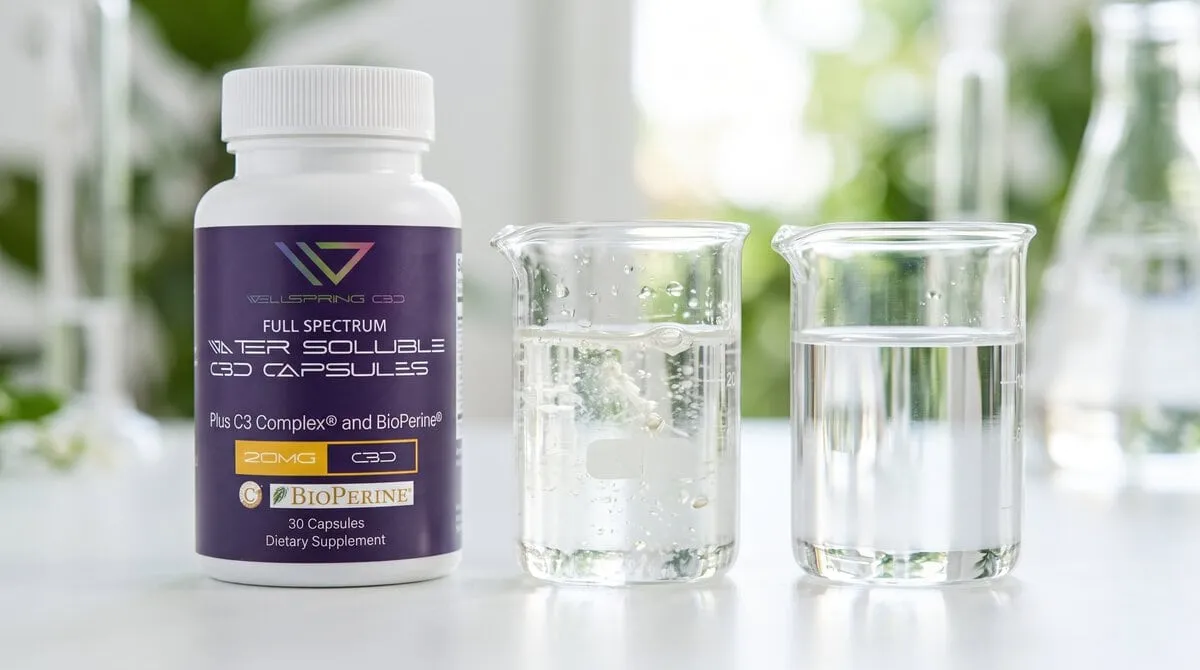
A high-potency 20mg water-soluble capsule actually delivers more biologically available CBD into your bloodstream than an 80mg conventional oil softgel. Rather than paying for large milligram numbers that pass straight through your digestive tract, water-soluble technology ensures that nearly every milligram you ingest goes to work inside your body.
For a broader breakdown of capsule vs. tincture delivery, explore our comparison on CBD capsules vs. oil.
The Economics: Cost per Absorbed Milligram
When shopping for wellness supplements, most consumers evaluate price by calculating the “cost per milligram” on the bottle label. For example, dividing a $50 bottle by 1,000mg yields $0.05 per milligram.
However, this metric measures purchased milligrams, not absorbed milligrams. When 85% of purchased oil is excreted unutilized, the true financial picture looks entirely different:
- Conventional 1,500mg CBD Oil ($60): If bioavailability is 10%, your body only utilizes 150mg out of the entire bottle. The true cost is $0.40 per absorbed milligram.
- Advanced 600mg Water-Soluble CBD ($65): If bioavailability is 60%, your body utilizes 360mg out of the bottle. The true cost is $0.18 per absorbed milligram.
Despite a slightly higher upfront retail price due to sophisticated nano-processing, water-soluble formulations deliver more than double the active cannabinoid value per dollar spent.
Curcumin C3 Complex and BioPerine: The Bioavailability Synergy
Recognizing that multiple therapeutic plant compounds suffer from poor oral bioavailability, Wellspring CBD formulates with patented, clinically proven bio-enhancers.
Curcumin—the primary active polyphenol found in turmeric root—is renowned for supporting joint flexibility and physical recovery. However, like raw CBD, standard curcumin has notoriously poor oral bioavailability (<1%) and rapid metabolic elimination.
To overcome this, our advanced 20mg water-soluble CBD capsules with C3 Complex incorporate two patented botanical extracts:
- Curcumin C3 Complex®: A patented, standardized extract containing 95% total curcuminoids (curcumin, demethoxycurcumin, and bisdemethoxycurcumin), offering clinically verified antioxidant and inflammatory cascade support.
- BioPerine®: A patented black pepper extract standardized to 95% piperine. Seminal clinical pharmacology studies published in Planta Medica demonstrated that co-administering BioPerine increases curcumin bioavailability by up to 2,000% by safely and temporarily inhibiting glucuronidation pathways in the liver and intestinal wall.
When paired with water-soluble, broad spectrum CBD, this combination creates an unprecedented systemic synergy for chronic joint mobility and physical recovery.
Direct Comparison: Water-Soluble CBD vs. Conventional CBD Oil
| Feature / Metric | Conventional CBD Oil (Tinctures & Softgels) | Advanced Water-Soluble CBD Formulations |
|---|---|---|
| Particle Size | 1,000 to 5,000+ nanometers (macro-droplets) | Under 50 to 100 nanometers (nano-emulsified) |
| Systemic Bioavailability | Low (estimated 6% to 15% oral swallowed) | High (estimated 45% to 70%+ oral absorption) |
| Absorption Speed | 45–90 minutes (requires bile salt emulsification) | 15–20 minutes (rapid passive mucosal uptake) |
| Meal Dependency | Requires dietary fats for optimal absorption | Absorbs consistently on empty or full stomach |
| Taste & Drinkability | Grassy, oily; floats on liquids as separated film | Clean; dissolves seamlessly into water, coffee, or tea |
| Gastrointestinal Feel | Heavy MCT oil carrier can cause mild stomach upset | Gentle, starch-encapsulated; zero digestive strain |
| Primary Advantage | Familiar, economical entry point for sublingual use | Maximum cellular delivery, fast onset, higher cost-efficiency |
To explore our full range of oral formats, browse our complete collection of lab-tested CBD capsules or our traditional sublingual CBD drops.
Frequently Asked Questions
Can I make regular CBD oil water-soluble by stirring it vigorously?
No. Vigorously shaking or blending CBD oil into water, coffee, or a smoothie creates only a temporary physical suspension. Within minutes, the hydrophobic oil droplets coalesce and separate back to the surface. True water-soluble CBD requires laboratory-grade nano-emulsification or molecular microencapsulation to permanently suspend nanoscale particles.
Does water-soluble CBD wear off faster than CBD oil?
Because water-soluble CBD reaches peak blood plasma concentrations faster (15–30 minutes vs. 90–120 minutes), some users perceive the onset as more pronounced. However, once in systemic circulation, the elimination half-life of cannabidiol remains standard, providing steady endocannabinoid support for 6 to 8 hours.
Is water-soluble CBD safe for daily use?
Yes. Clean water-soluble formulations use food-grade, biocompatible vegetable starches, natural gums, or food-grade emulsifiers to encapsulate the cannabinoid extract. They do not introduce synthetic petroleum derivatives or harsh solvents.
How does sublingual oil compare to swallowed water-soluble capsules?
Holding traditional CBD oil under your tongue for 60 to 90 seconds allows some cannabinoids to absorb directly through sublingual microcapillaries, bypassing the stomach. However, most people swallow a significant portion of the dropper before sublingual absorption completes. Water-soluble capsules ensure that 100% of the ingested serving absorbs with high efficiency, eliminating the need to hold oily liquids in your mouth.
The Wellspring Standard of Formulation
Since 2013, Wellspring CBD has formulated clean, reliable hemp remedies in Cheyenne, Wyoming with an unwavering commitment to physiological efficacy. We do not inflate label milligrams with unabsorbable filler oils. Every batch of our water-soluble capsules and sublingual tinctures is independently verified by third-party ISO 17025 accredited laboratories for potency, purity, and 0.0% THC safety.
If you are tired of paying for CBD that passes straight through your digestive tract without delivering results, experience the difference of clinical bioavailability. Explore our advanced water-soluble formulas today, backed by our 90-Day Satisfaction Promise.
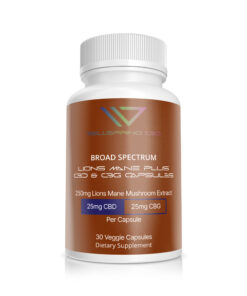
🌿 Formulations in This Guide
Recommended Products for Your Routine
Organic US-grown hemp, batch Certificate of Analysis published on each page, backed by our 90-Day Money-Back Promise.


Jason Liss — Co-Founder & Chief Formulator
As a Co-Founder of Wellspring CBD, Jason has been an advocate and pioneer in the cannabis and hemp industries since 1996. Passionate about helping people achieve better health through unique natural supplements, Jason uses his decades of experience to guide readers toward effective wellness solutions.
In this guide
- 01 The Biophysics Problem: Why Traditional CBD Oil Struggles Inside the Body
- 02 How Water-Soluble CBD Works: Nanotechnology and Microencapsulation
- 03 The Absorption Clock: Onset Timing and Plasma Peaks
- 04 The Bioavailability Math: Why 20mg Water-Soluble Delivers What 80mg Oil Cannot
- 05 The Economics: Cost per Absorbed Milligram
- 06 Curcumin C3 Complex and BioPerine: The Bioavailability Synergy
- 07 Direct Comparison: Water-Soluble CBD vs. Conventional CBD Oil
- 08 Frequently Asked Questions
- 09 The Wellspring Standard of Formulation
Scroll to read · tap a topic to jump
🌱 New Here? First Order
Take 40% Off Your First Order
Join the Wellspring Journal for honest CBD education — enter your name and email to unlock an exclusive first-order code. Instant, no spam, one-click unsubscribe.
🔒 Instant Code
🌿 Zero Spam
✉️ 1-Click Unsubscribe
🌴 90-Day Promise
Discussion